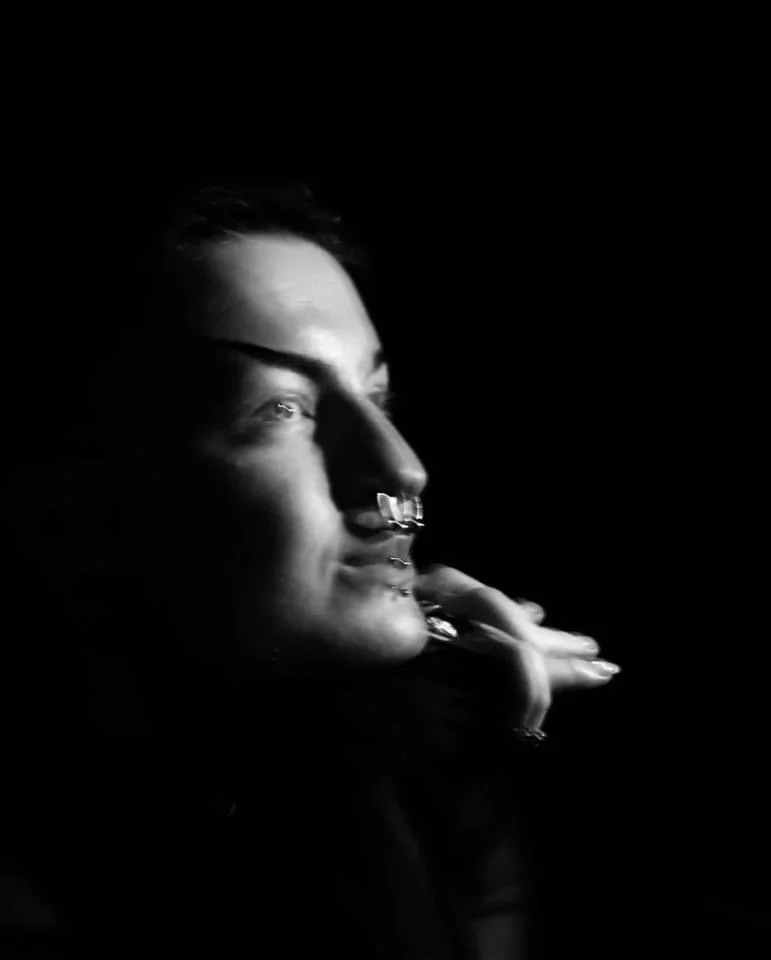
I am Oliver Lawrence Rinne.

b. Sedro Woolley, WA 2004.

Creating on the unceded traditional territories of the Musqueam, Squamish, and Tsleil-Waututh Nations (Vancouver BC).

Rinne’s artistic practice is rooted in empowerment, healing, and reclamation of ones own narrative and embodiment. By exposing their personal histories, he aims to foster spaces of care, vulnerability, and collective connection for both the viewer and myself. Rinne works across materials + mediums, centering clay as a stand-in for the body, embellished with oil paint, glaze, and stainless-steel jewelry. These gestures that reflect intersectionality and the coexistence of embodied dualities: masculinity and femininity, life and death, stability and instability, silence and excess. His engagement with these materials critically examines their embedded histories and ideological frameworks. Each medium carries narratives of labor, value, representation, and power that shapes its legibility in the present moment. Clay becomes the index of material memory (a mutable proxy for corporeality) with its entangled discourses around the body, origin, and ritual. Oil paint invokes the epistemologies of Western art history and its investments in authorship, permanence, and the politics of depiction. Underglaze functions as a liminal skin mediating interior and exterior, preservation and exposure. Stainless steel jewelry brings associations of industrial durability, production, adornment, and constraint. Subtly operating between regimes of protection and control. By employing their juxtapositions, Rinne attempts to activate dialogue of how these historically contingent meanings are reproduced, resisted, and rearticulated through a queer, embodied practice. Destabilizing any fixed reading of the body in which they construct.


Constructed from theories of the uncanny and queerness, Rinne’s process begins with mental tangents. Fragments of thought that evolve into visual, physical forms. Through rough sketching, maquettes, and written reflections, they track where his mind moves and how each form speaks back, allowing the work to inform him as much as he shapes it. The physical forms, the conversations are born from the images of bodies they engage with, both human and inhuman, often in states of vulnerability or compromise + including his own. The images referenced mimic baroque theatricality and lingering sensuality such as the works of Caravaggio and Francisco de Goya alongside the contemporary visual cultures within kink and leather communities. Using this visual language, Rinne positions the mortal body as devotional, treating it with the gravity and reverence of religious narratives and imagery. In an ever-evolving dialogue with artist and theorists who engage with queerness, sexuality, and power such as Chris Curreri, Robert Mapplethorpe, Xandra Ibarra, Susan Stryker, bell hooks, Eve Kosofsky Sedgewick; their work interrogates whether lived experience can be reconstructed as a form of authorship that resists external inscription and normative capture. Rinne contends with the possibility that their practice performs as both a disarticulation and reconfiguration of internalized religious doctrine and intergenerational trauma, provoking the boundaries between undoing and repair. Rinne looks to create space for contemplation without judgment, where vulnerability and sexuality are held with care and seriousness. His practice aims not only to reflect the communities he come from, but to help build them – offering care, presence + a shared language for embodiment, survival, and connection.